Esther 7:3–6 · WEB
Esther Speaks for Her People: Esther 7:3–6
An Esther 7 devotional about speaking specifically against harm, using access for communal protection and making threatened people visible to power.
10 minutesRead
Esther 7:3–6
Open Esther 7:3–6 in the World English Bible. Read the whole passage slowly, noticing what Esther requests, how she identifies with her people, the words she uses for the danger and when she names Haman.
Reading prompt · World English Bible
Arrive
Esther has waited through preparation and two banquets before naming her request. When she speaks, she does not ask only for her own safety. She joins her life to the lives of her people.
Read Esther 7:1–6. Notice how precise her language becomes.
Reflect
Esther begins with relationship and request, but she does not soften the reality of the decree. She says that she and her people have been sold for destruction. The danger is named in terms the king cannot mistake.
She also reveals her identity. Remaining hidden may have protected Esther for a time, but this moment requires solidarity. Her position has meaning because she uses it to make others visible.
Finally, Esther identifies Haman. Truthful advocacy moves beyond vague sadness when evidence allows responsibility to be named. This should happen with care, accuracy and appropriate processes, not through reckless accusation.
Esther’s courage does not mean every harmed person must disclose publicly or confront someone powerful. People with safer access can carry responsibility too. The passage asks those with influence whether they will listen, document, name harm accurately and act to protect people whose voices are easier to ignore.
Pause and notice
A few questions to sit with
- How does Esther connect her own life with the lives of her people?
- What makes her request specific rather than vague?
- How can a person with safer access support someone who should not have to speak alone?
Pray
God of truth and protection, give us courage to name harm accurately and wisdom to use influence well. Guard vulnerable people from being forced to speak alone, and move those with power from listening to protective action. Amen.
Carry it with you
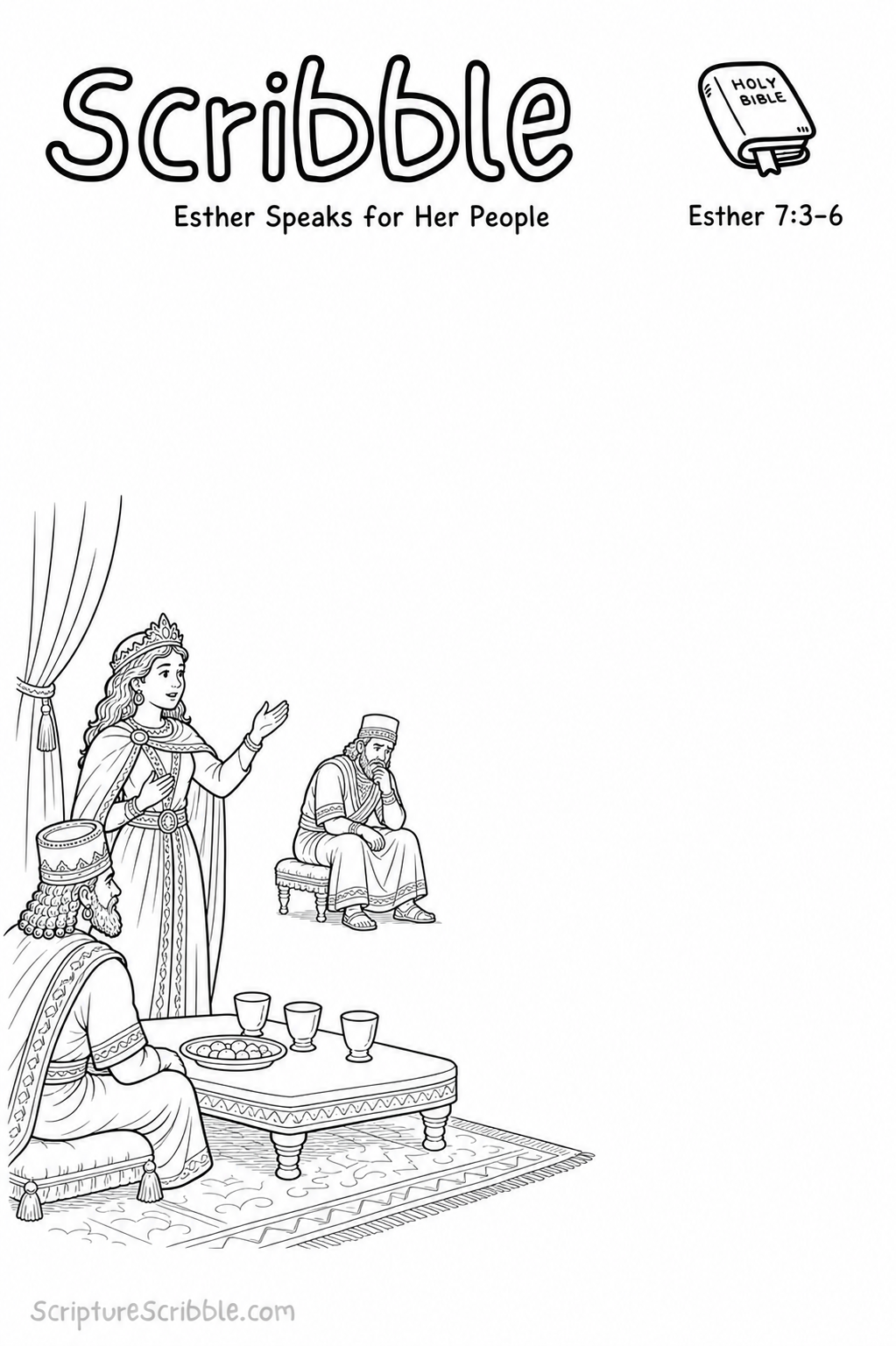
Add a symbol for the people beyond the banquet room. Then write one sentence that names a concern clearly: what is happening, who is affected and what safe action is needed.
Draw
Esther 7:3–6 Esther Speaks for Her People Devotional Drawing Page Printable
Continue reflecting with the printable connected to this passage.
Keep exploring
Related reflections

devotional drawing page
Esther 7:3–6 Esther Speaks for Her People Devotional Drawing Page Printable
A free Esther 7:3–6 Scribble drawing page showing Queen Esther speaking for her people before the king and Haman.

Esther 9:20–22
A Celebration Shared: Esther 9:20–22
An Esther 9 devotional about Purim as remembrance, shared food and dignified generosity after communal danger, with care around the chapter’s violent context.

Esther 5:1–2
Esther Approaches the King: Esther 5:1–2
An Esther 5 devotional about prepared courage, communal support and taking a wise step when the outcome remains outside our control.