Acts 16:25–34 · WEB
Songs in the Night: Acts 16:25–34
A thoughtful Acts 16:25–34 reflection on hope within unjust confinement, refusal of retaliatory escape and a household transformed through care.
10 minutesRead
Acts 16:25–34
Open Acts 16:25–34 in the World English Bible. Read the whole passage slowly, noticing what happens before the songs, why Paul calls out and what the jailer does after listening.
Reading prompt · World English Bible
Arrive
Paul and Silas sing after being stripped, beaten and placed in stocks. The story names state violence before it describes their midnight worship.
Reflect
Prayer and song create shared attention in confinement; the other prisoners listen. Hope takes communal form without pretending their injuries are unreal.
When the doors open, Paul and Silas do not simply flee. Paul sees that the jailer is about to die and calls out to interrupt the harm.
The jailer then tends their wounds and shares food. Power relationships shift through bodily care, listening and a household opened to new allegiance.
The passage does not make unjust imprisonment good. It shows people refusing to let violence determine every later action, even while Paul will still demand public accountability.
Pause and notice
A few questions to sit with
- What injustice precedes the midnight songs?
- Why do the prisoners remain after the doors open?
- How do care and accountability both appear in the larger story?
Pray
God present in the night, meet people harmed by unjust systems. Sustain hope without denying trauma, interrupt cycles of death and lead us toward care, freedom and accountability. Amen.
Carry it with you
Add a dawn line and support one organisation that assists prisoners, survivors of state violence or families affected by incarceration.
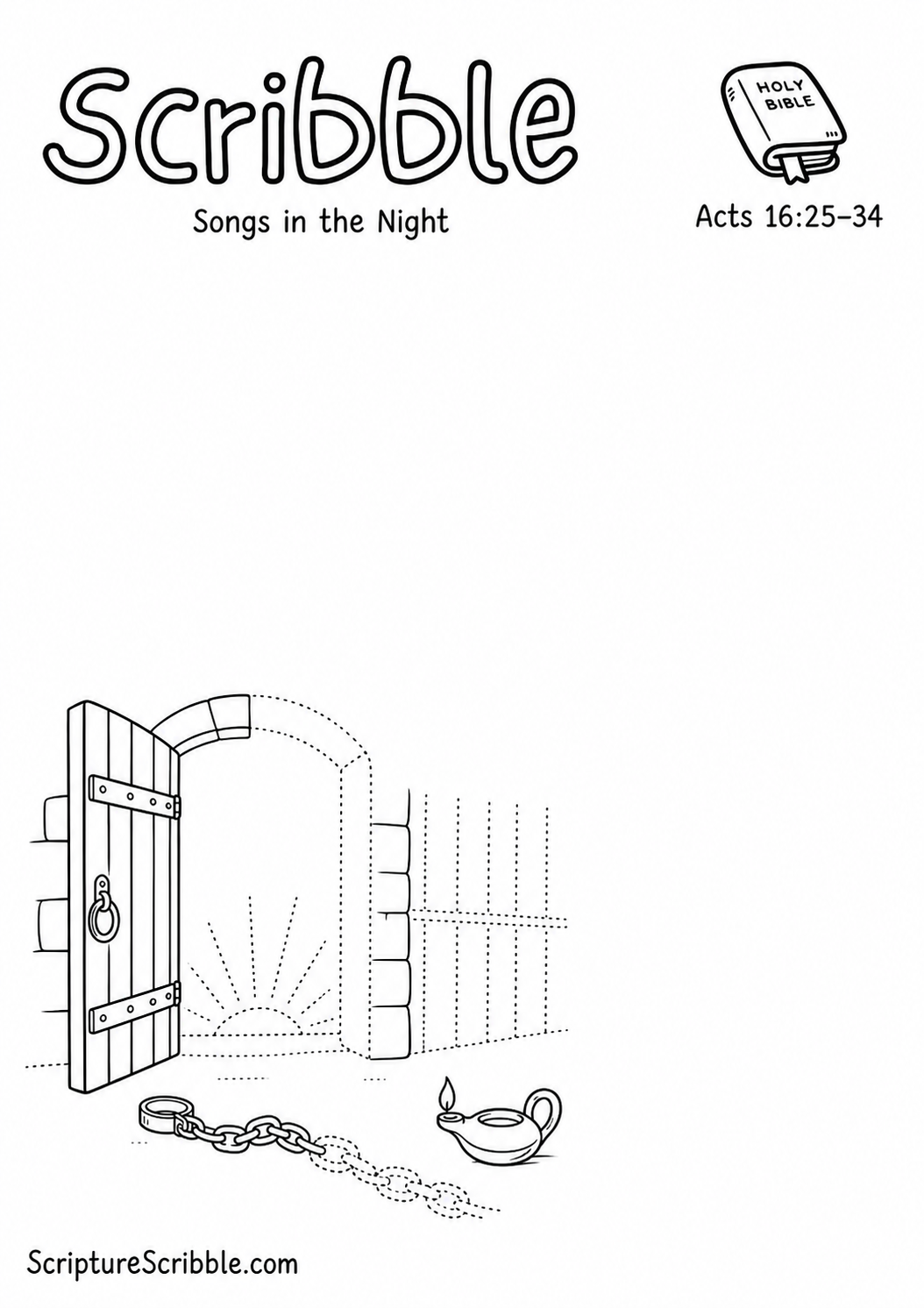
Draw
Acts 16:25–34 Songs in the Night Devotional Drawing Page Printable
Continue reflecting with the printable connected to this passage.
Keep exploring
Related reflections

devotional drawing page
Acts 16:25–34 Songs in the Night Devotional Drawing Page Printable
A free Acts 16:25–34 drawing printable with a deliberately unfinished open prison door, loosened chain and unfinished dawn scene, inviting readers to notice the passage and complete the picture in their own way.

Acts 9:10–19
The Courage of Ananias: Acts 9:10–19
A thoughtful Acts 9:10–19 reflection on honest fear, tested obedience and courageous welcome toward a former persecutor.

Acts 3:1–10
Peter Heals the Lame Beggar: Acts 3:1–10
An Acts 3 devotional about Peter helping a man at the Beautiful Gate, restored participation and disability-aware Christian welcome.