Titus 1:15–16 · WEB
When Words and Conduct Disagree: Titus 1:15–16
A Titus devotional for Titus 1:15–16 with a grounded reflection, questions, prayer and a practical next step. Titus warns that confident claims about knowing God are contradicted when a person’s actions remain corrupt and harmful.
10 minutesRead
Titus 1:15–16
Open Titus 1:15–16 in the World English Bible. Read the whole passage slowly, noticing who speaks, what changes and how people respond.
Reading prompt · World English Bible
Arrive
Read Titus 1:15–16 without rushing. Notice the setting, the people who carry power or vulnerability, and the response the passage treats as faithful.
Titus warns that confident claims about knowing God are contradicted when a person’s actions remain corrupt and harmful. This reflection stays close to that movement in Titus rather than turning the passage into an isolated slogan.
Reflect
At the heart of this reading is a question of formation: what kind of people are we becoming as we respond to God and to one another? When Words and Conduct Disagree invites attention to motives as well as visible outcomes. A faithful reading does not flatten the tension or pretend that every circumstance is simple.
Titus 1:15–16 belongs within the wider witness of Titus. Reading it through the theme When Words and Conduct Disagree requires attention to its particular details. We should resist using the passage to silence grief, excuse harm or promise control over outcomes the text does not promise. Scripture can comfort and correct us at the same time.
Titus warns that confident claims about knowing God are contradicted when a person’s actions remain corrupt and harmful. Let that emphasis examine a real relationship, responsibility or decision. Grace is not an escape from action; it gives us freedom to respond without building our worth on appearing impressive or certain.
Carry the reading into one proportionate step: compare one stated value with this week’s behaviour and make the smallest honest correction. Small practices do not earn God’s care, but they can make attention, justice, mercy and trust more concrete in ordinary life.
Pause and notice
A few questions to sit with
- What detail or movement in Titus 1:15–16 asks for your attention today?
- Where does When Words and Conduct Disagree meet a real situation in your life or community?
- What first step could help you put this response into practice? Compare one stated value with this week’s behaviour and make the smallest honest correction.
Pray
Faithful God, meet us in Titus 1:15–16. Give us clear sight, humble courage and love that becomes truthful action. Keep us close to Christ as we practise what we have heard. Amen.
Carry it with you
Compare one stated value with this week’s behaviour and make the smallest honest correction.
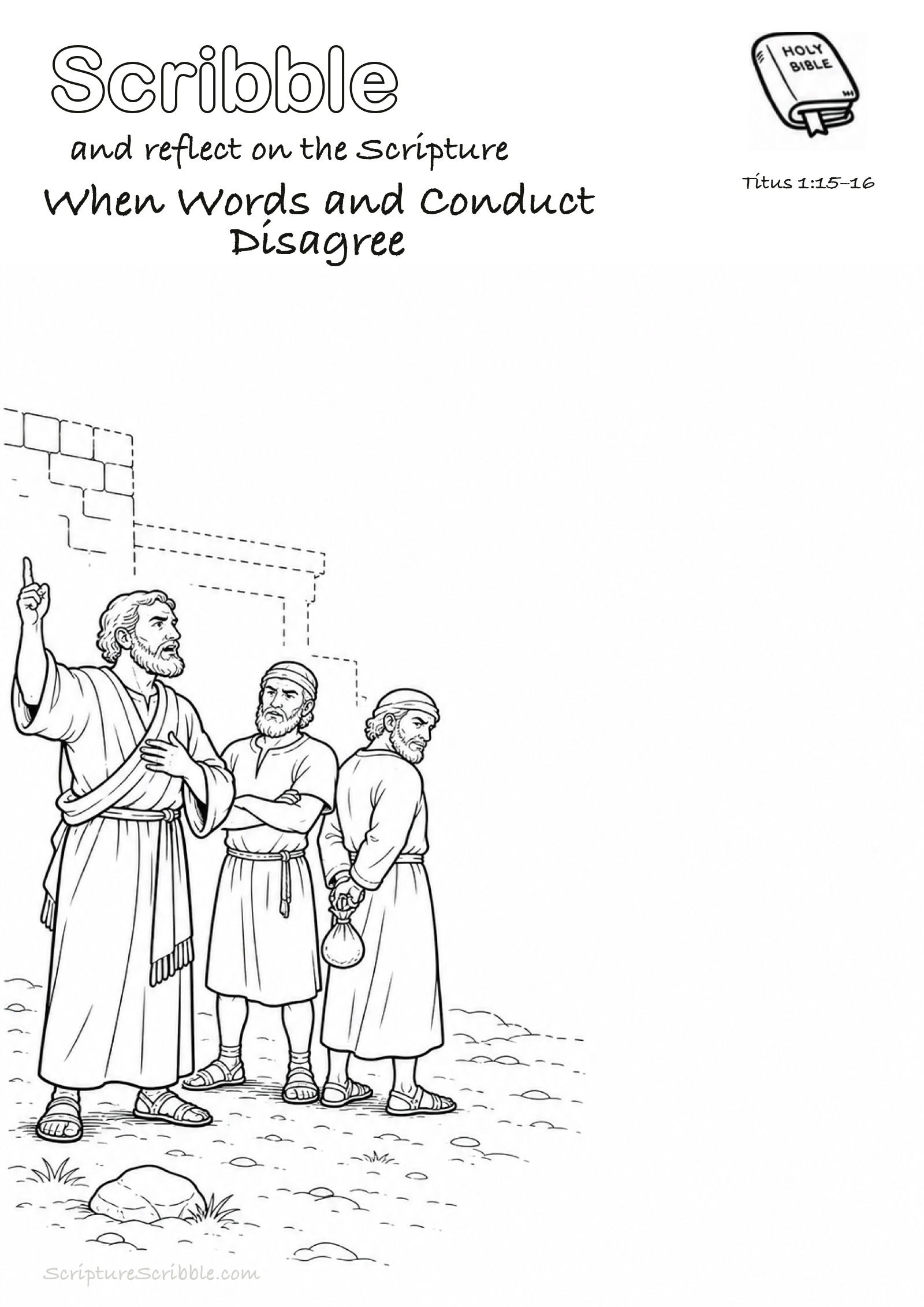
Draw
Titus 1:15–16 When Words and Conduct Disagree Devotional Drawing Page Printable
Continue reflecting with the printable connected to this passage.
Keep exploring
Related reflections

devotional drawing page
Titus 1:15–16 When Words and Conduct Disagree Devotional Drawing Page Printable
A free Titus 1:15–16 devotional drawing page printable featuring an unfinished Bible scene inspired by “When Words and Conduct Disagree”.
Titus 3:9–11
Do Not Feed Fruitless Quarrels: Titus 3:9–11
A Titus devotional for Titus 3:9–11 with a grounded reflection, questions, prayer and a practical next step. Titus is told to avoid controversies that produce division without useful fruit, while addressing persistent disruption clearly.

Titus 2:11
Grace Has Appeared: Titus 2:11
A thoughtful Titus 2:11 devotional about grace has appeared, with an uncluttered Scripture typography colouring page for slower reflection.