Matthew 11:28–30 · WEB
A Gentle Yoke: Matthew 11:28–30
A thoughtful Matthew 11:28–30 reflection on rest, teachability and shared load under Jesus’ gentle leadership.
10 minutesRead
Matthew 11:28–30
Open Matthew 11:28–30 in the World English Bible. Read the whole passage slowly, noticing the invitations to come, take and learn, and how Jesus describes his own character.
Reading prompt · World English Bible
Arrive
Weariness is not always solved by a free hour. Some burdens settle deep into identity, responsibility and the fear that stopping will disappoint everyone.
Read the passage slowly. Notice the people, movements and repeated words before trying to turn it into a lesson.
Reflect
Jesus begins with “come to me.” Rest is relational before it is a technique, grounded in the character of the one who receives the weary.
Taking his yoke means learning his way, not escaping every responsibility. Yet the teacher describes himself as gentle and humble, never crushing or exploitative.
A community cannot praise this invitation while rewarding burnout. Shared loads, boundaries, fair expectations and protection from abuse are practical expressions of gentleness.
Ask which burden belongs to faithful love and which has been imposed by fear, manipulation or impossible standards. Bring the difference into honest prayer and conversation.
Pause and notice
A few questions to sit with
- Which burden is making your soul weary?
- How does Jesus describe the teacher behind the yoke?
- What boundary or shared support would make responsibility more humane?
Pray
Gentle Jesus, receive us in our weariness. Teach us your unforced way, free us from crushing burdens and help our communities make rest real. Amen.
Carry it with you
Leave one field row blank. Use that space to write a boundary, request for help or period of rest you will honour.
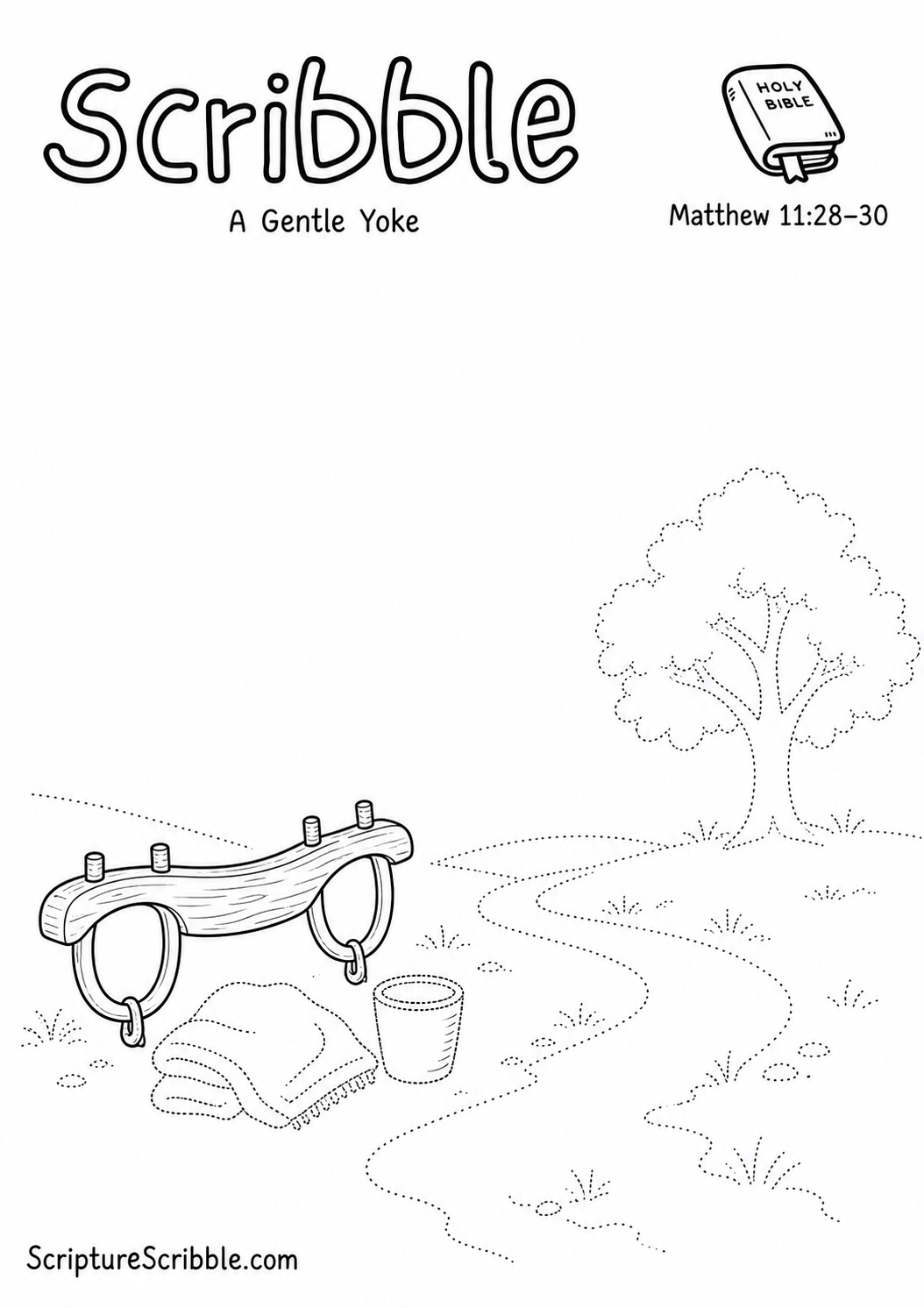
Draw
Matthew 11:28–30 A Gentle Yoke Devotional Drawing Page Printable
Continue reflecting with the printable connected to this passage.
Keep exploring
Related reflections

devotional drawing page
Matthew 11:28–30 A Gentle Yoke Devotional Drawing Page Printable
A free Matthew 11:28–30 drawing printable with a deliberately unfinished wooden yoke and unfinished field scene, inviting readers to notice the passage and complete the picture in their own way.

Matthew 5:14–16
Light on the Stand: Matthew 5:14–16
A Matthew 5 reflection on visible goodness that serves neighbours and directs attention toward God rather than ourselves.

Matthew 25:31–40
The Neighbour in Front of Us: Matthew 25:31–40
A thoughtful Matthew 25:31–40 reflection on recognising Christ through concrete solidarity with people facing hunger, exclusion, illness and imprisonment.